The Night I Realized I Had Never Actually Seen the Northern Lights
I used to confidently tell people that I had seen the Northern Lights before.
Toronto.
Montreal.
A few spontaneous late-night drives chasing aurora alerts.
And technically… yes, I had seen them.
It usually looked like a faint green smudge on the horizon.
Subtle. Mysterious. Slightly magical.
But also… a bit underwhelming.
Then I went to Yellowknife.
On the last night of my trip, around 9 PM, the sky suddenly woke up.
And it didn’t stop until almost 2 AM.
Green waves stretched across the entire sky.
Purple streaks appeared along the edges.
Sometimes the lights moved slowly like drifting clouds.
Sometimes they pulsed and rippled like giant glowing curtains.
At that moment I realized something:
I had been watching the movie trailer in 144p, while the full IMAX version had been playing somewhere else.
And apparently that place was Yellowknife.
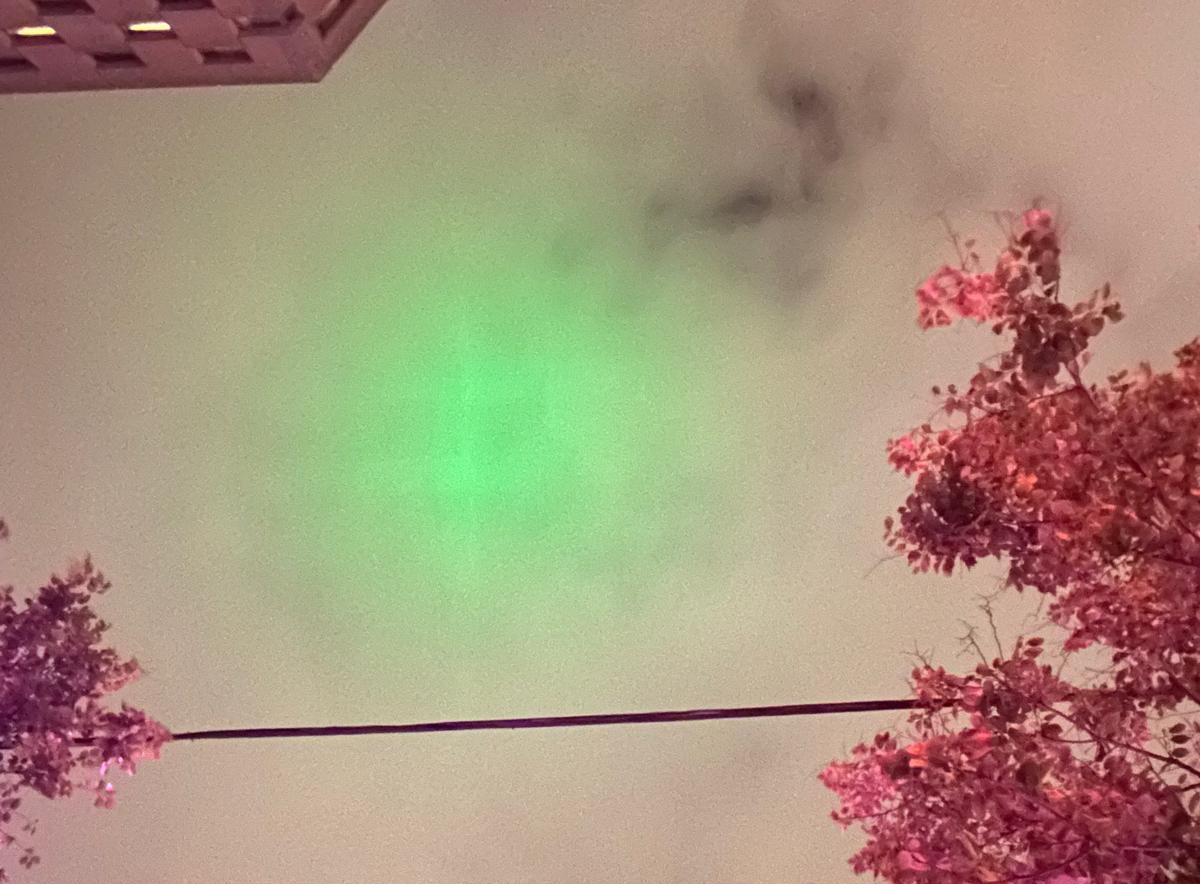
The 144p trailer version I saw in Montreal.
So What Actually Creates the Northern Lights?
The science behind it is surprisingly simple.
Think of it as a cosmic pinball game between the Sun and Earth.
The Sun constantly releases streams of charged particles called solar wind.
Most of these particles get blocked by Earth’s magnetic field - which basically acts like an invisible shield protecting our planet.
But near the North and South poles, the magnetic field lines curve downward and create a sort of opening.
Solar particles slide down those magnetic field lines and crash into Earth’s atmosphere.
When they collide with gases in the atmosphere…
They release energy in the form of light.
And that glowing light is what we see as the Aurora Borealis in the north (and Aurora Australis in the south).
Why Are the Colors Different?
One thing that surprised me in Yellowknife was how many colors appeared.
Most people imagine the aurora as green.
But that night there were pink edges, purple streaks, and flashes of red.
That happens because different gases react differently when hit by solar particles.
Green
The most common color.
It comes from oxygen atoms about 100–300 km above Earth.
Red
When oxygen gets hit at even higher altitudes (above ~300 km), it produces a deeper red glow.
Purple / Pink
When the particles dive deeper and collide with nitrogen molecules, you start seeing purples, blues, and pinks along the edges.
Basically, the atmosphere becomes a giant neon sign powered by the Sun.
Why Do the Lights “Dance”?
The movement is what makes auroras feel surreal.
They don’t just sit there - they flow, ripple, and swirl across the sky.
This happens because the particles follow Earth’s magnetic field lines, which constantly shift and vibrate due to solar activity.
A helpful way to picture it:
Imagine Earth’s magnetic field like giant invisible strings around the planet.
When solar wind interacts with them, those strings vibrate - and the aurora simply follows those vibrations.
Which is why the lights look like they’re dancing across the sky.
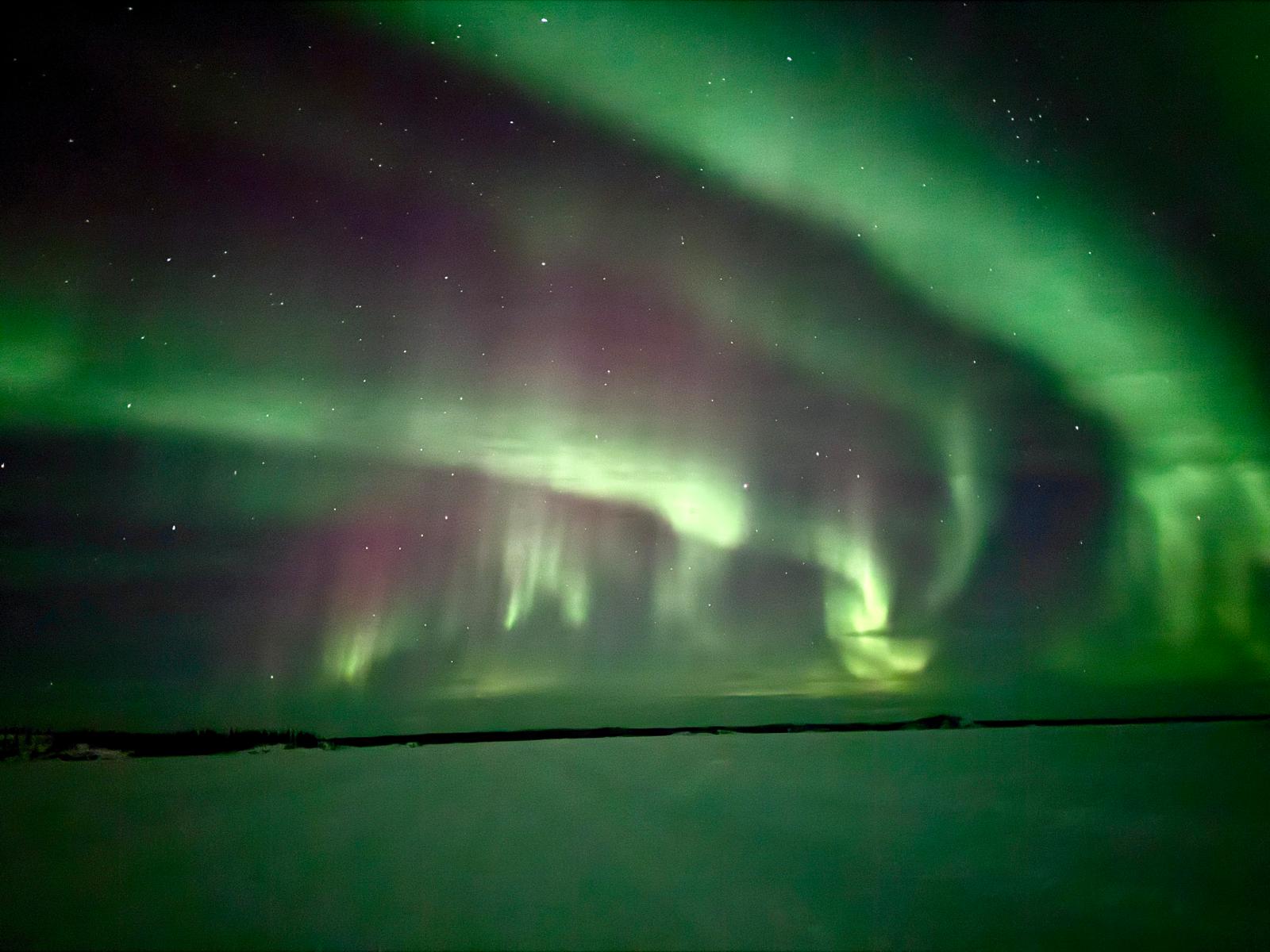
When the sky starts moving.
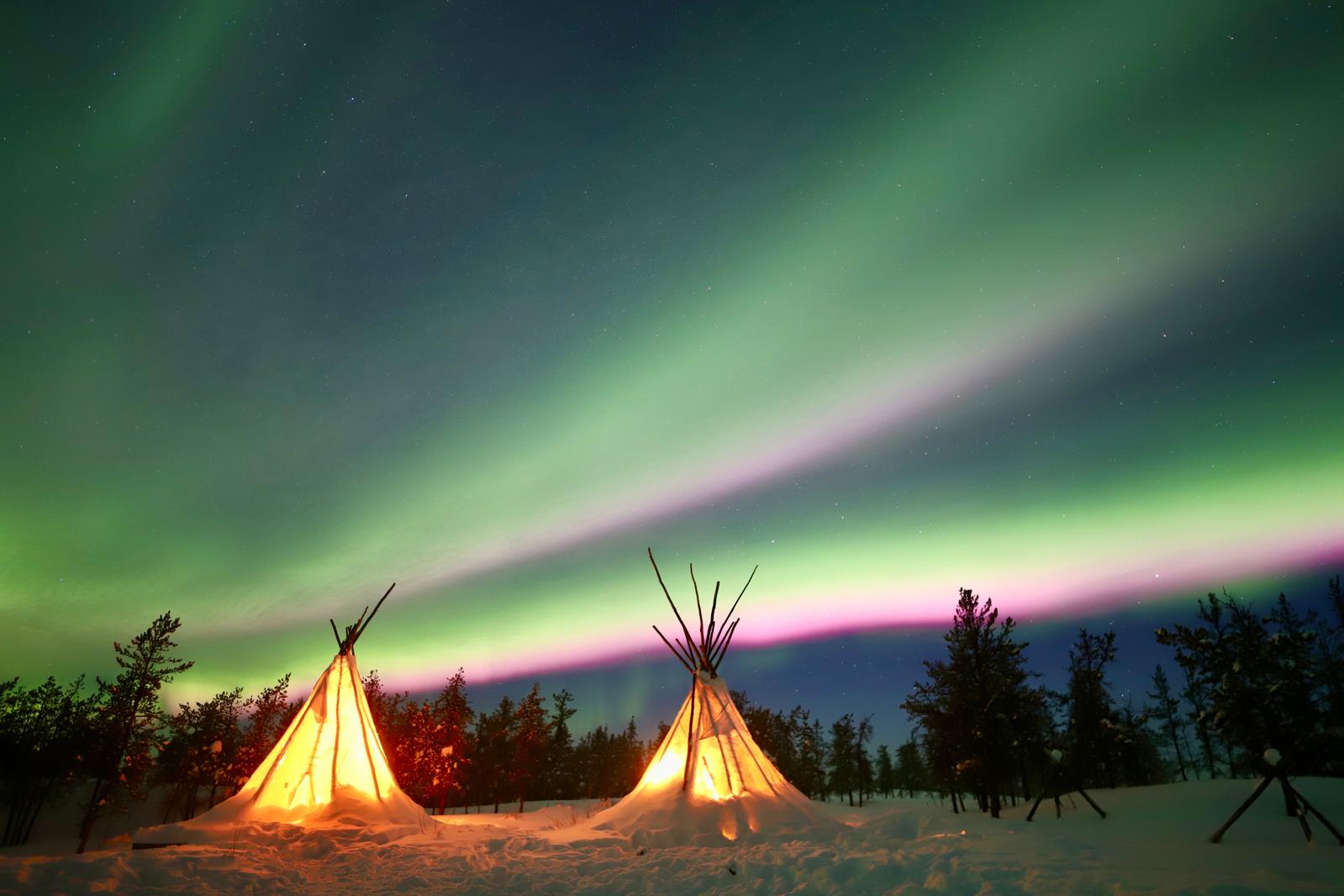
When oxygen and nitrogen both join the party.
Why Yellowknife Is Basically a Front-Row Seat
Auroras don’t appear randomly everywhere.
They mostly occur in a ring around the poles called the Auroral Oval.
And Yellowknife sits almost directly underneath it.
Which means instead of seeing the aurora on the horizon (like in southern cities), you often see it directly overhead.
That’s the difference between:
“Oh look… faint green lights.”
and
“Why is the entire sky moving?”
Quick Side Story: Why Is It Called Yellowknife?
The name has nothing to do with the color of the sky.
It comes from the Yellowknives Dene, an Indigenous group who lived in the region and were known for crafting tools from natural copper deposits.
Those copper blades had a yellowish color.
Early explorers basically saw them and said:
“Ah yes… the people with the yellow knives.”
And the name stuck.
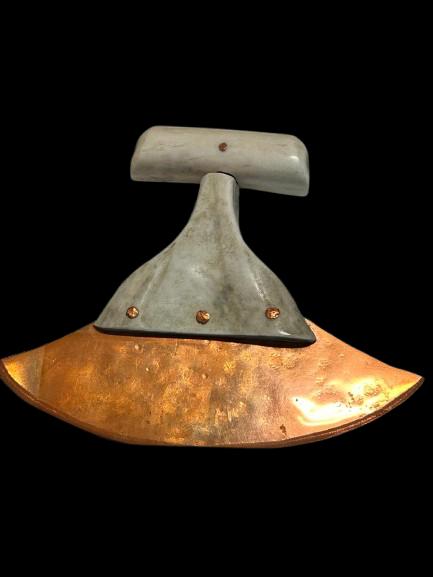
The original “yellow knife”.
Final Thought
I had chased the northern lights before - in Toronto, Montreal, and on a few ambitious night drives.
But that night in Yellowknife, watching the sky ripple with color for five straight hours, I realized something simple:
I hadn’t really seen the aurora before.
I had just seen the preview.
And somewhere above the Arctic sky, the full show had been waiting the whole time.